

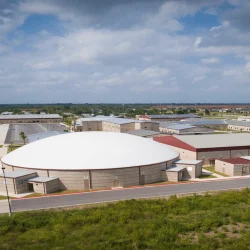

On June 20, the storm shelter Dome Technology built in Los Fresnos, Texas, was opened to locals seeking shelter from flooding in the Rio Grande Valley.
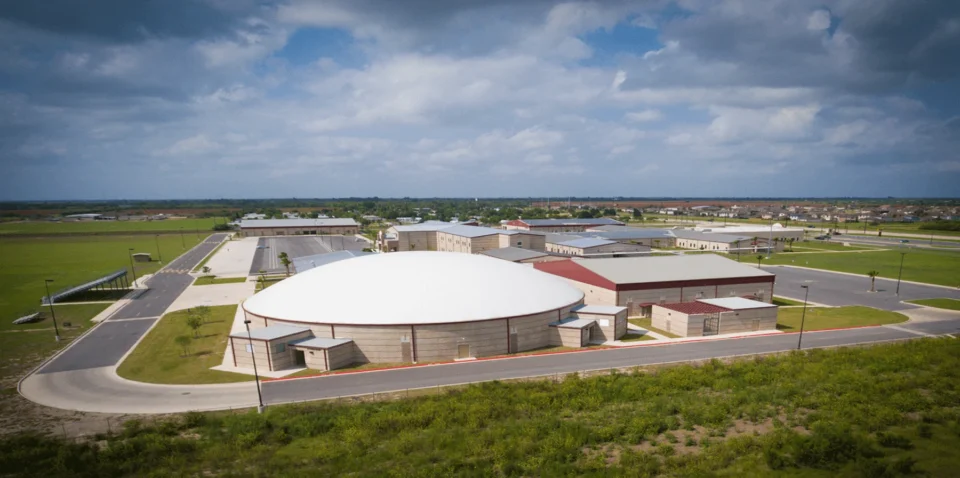
According to the Brownsville Herald, officials from Cameron County, the City of Los Fresnos, Los Fresnos Consolidated Independent School District and the American Red Cross worked together to manage shelter availability. The shelter is located on the Los Fresnos United campus and was finished as a gymnasium.
For more information, visit the Herald website.

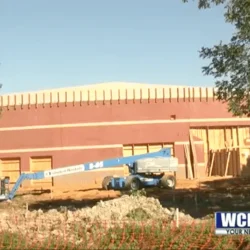
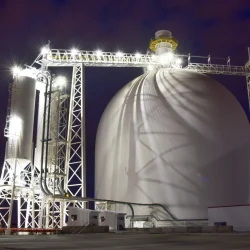
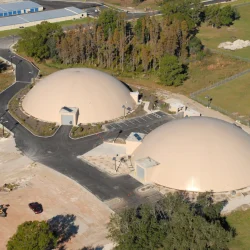
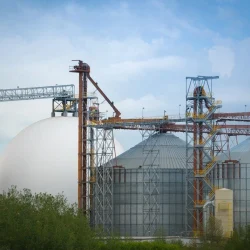
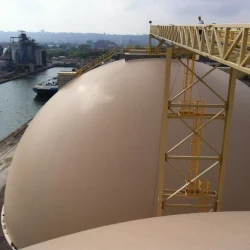
Grain companies looking to increase storage at existing sites can maximize their investment by selecting a DomeSilo™ from Dome Technology. By building a new structure on an existing footprint, companies gain greater storage capacity as the dome is built upward, not outward, requiring no additional land.
Dome Technology pioneered the reinforced-concrete dome concept 40 years ago. A DomeSilo is essentially a cylinder-shaped reinforced-concrete structure with a dome-shaped roof. Based on innovative construction methods, no seams are present.
These domes are designed to store more product in a smaller footprint, even when compared to silos. A silo’s traditional conical roof cannot support product, so the entire interior cannot be used for storage. Because the hemispherical geometry of a dome renders strength at all points of the structure, the entire interior can be used to contain product. In addition, the curved design can double or triple the capacity of any existing circle ground pile with the same footprint or be designed with tall sidewalls to replace or add bin space to an upright facility.
“The DomeSilo is a reinforced-concrete structure that provides great grain protection. Domes provide ideal conditions for grain, safeguarding against insects, birds, pests, and weather to ensure top-level food-grade storage,” Dome Technology Vice President of Marketing Jason Miller said.
Ideal grain-storage conditions
Since wheat, corn, canola, soybeans, and the like are sensitive to moisture and temperature changes, an airtight structure that wards off water and controls the interior environment is the best way to ensure quality control. That level of protection is made possible by the seamless or monolithic dome shell.
A dome staves off boundary issues other structures face thanks to its construction materials. First, the airform covering the entire dome prevents water and moisture from seeping in. Secondly, the combination of waterproof membrane, reinforced concrete shell, and continuous layer of polyurethane foam prevents extreme interior temperature fluctuation; these features reduce heating and cooling of the walls and air inside, preventing condensation.
To complement the protection provided by the shell, grain domes are commonly equipped with monitors and sensors for detecting temperature changes and the presence of carbon dioxide. Blowers near the apex and at the ground level provide aeration for optimal storage conditions.
Editor’s note: The preceding is an excerpt from an article published in the February 2018 issue of Dry Cargo International. For more information, including details on reclaim systems, high throughput, and cost-effective construction, visit Dry Cargo International and click on the February 2018 issue.
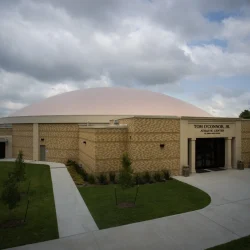
On March 19 FEMA published a news release detailing how the St. Joseph High School FEMA Dome protected hundreds of Victoria, Texas, residents during Hurricane Harvey. Dome Technology built the roof portion of the shelter, part of the Tom O’Connor Jr. Athletic Center facility, in 2015.
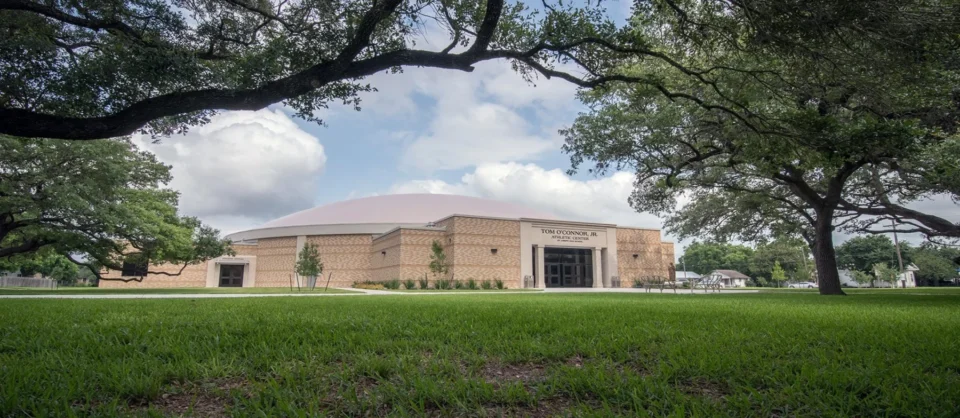
According to the release, about 400 evacuees sought shelter in the safe room, which stands 168 feet wide. This was the first time locals sought refuge in the shelter during a mandatory evacuation.
The FEMA dome in Victoria meets the mandated space requirements for 1,000 occupants during a hurricane and 4,000 people during a tornado.
To read the full release, visit the FEMA site.
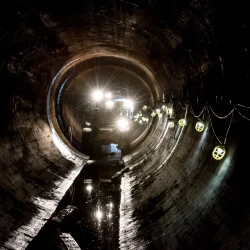
Dome Technology has produced a video documenting an outlet-pipe rehabilitation project completed at Hebgen Dam in Montana in 2017.
Completed in 1911, the original unreinforced concrete pipe lined with 16-foot-long (4.88m) wood-timber staves functioned as the reservoir’s low-level outlet for more than 100 years.
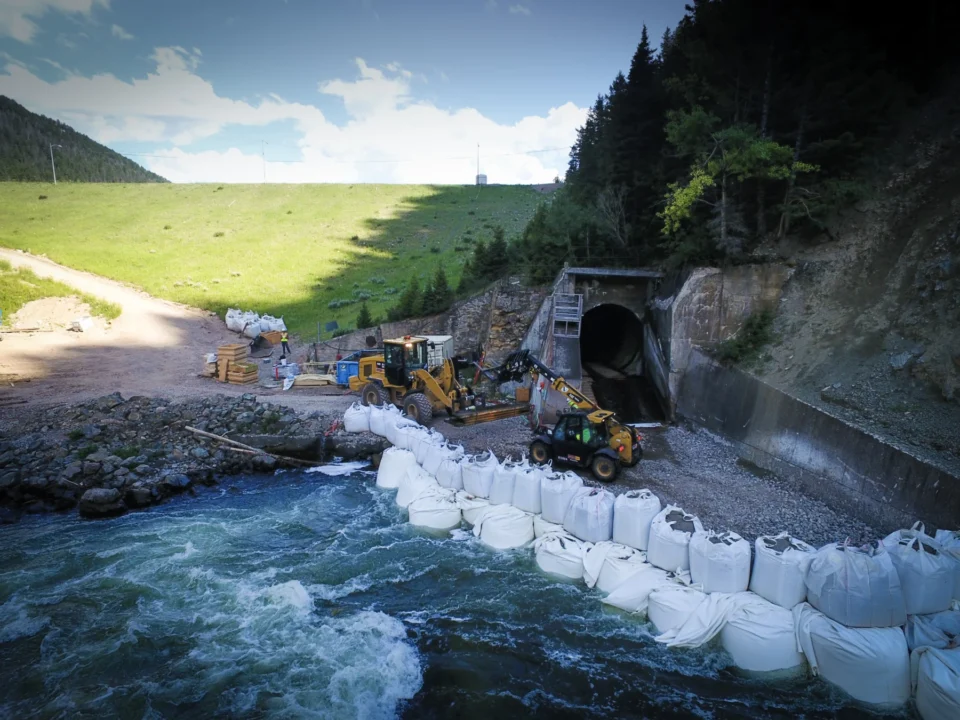
Dome Technology was contracted to rehabilitate the 475-foot (145m) tunnel for another century of function by installing a concrete liner inside the pipe. The team started by removing the wood staves, then used chemical grout injections to stop leaks in the existing pipe. Next, the team lined the bottom of the tunnel with prebuilt rebar cages. Concrete was then placed and finished on the lower portion of the tunnel. Crews did the same for the top portion of the tunnel, applying concrete to the upper curve using the shotcrete method. In fact, “it was our ability to position the rebar and spray the concrete that made us valuable on this project,” said Dome Technology project manager Jason Craig.
Click here to watch the video. The complete project summary can be read here.
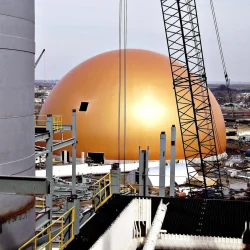
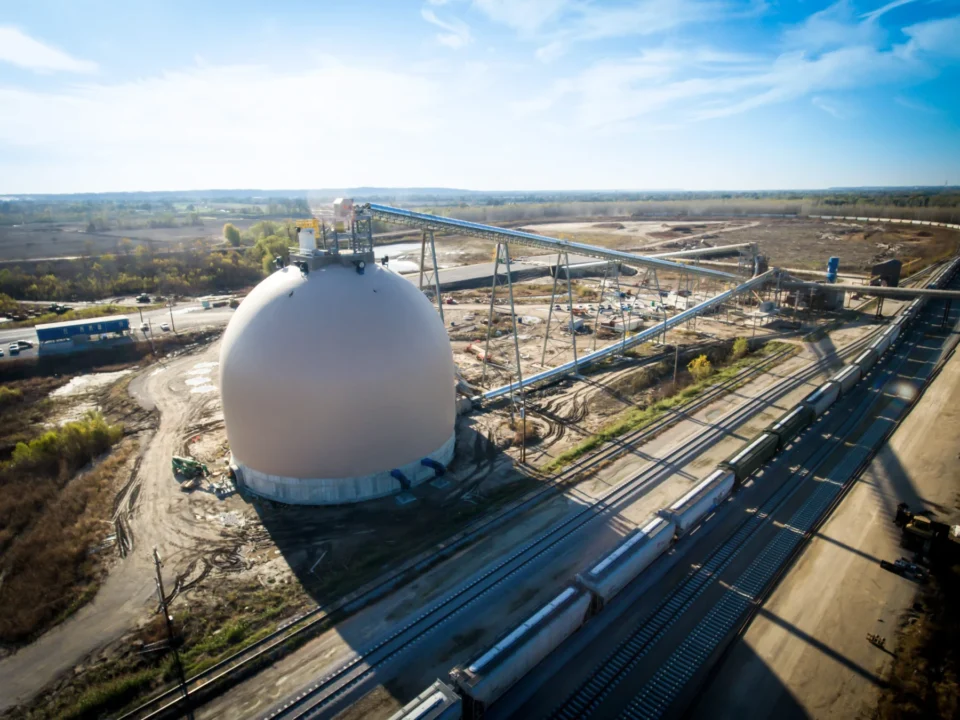
Better product protection was the main reason ADM chose a dome for its coal cogeneration plant in Clinton, Iowa.
According to ADM Clinton Cogeneration plant manager Kevin Duffy, ADM has always stored coal inside some sort of structure to manage dust, but selecting a dome from Dome Technology was an improved means of maintaining coal quality. The dome’s seamless construction protects coal since “you don’t get rain, (and) you don’t pick up the other moisture from weather events,” Duffy said.
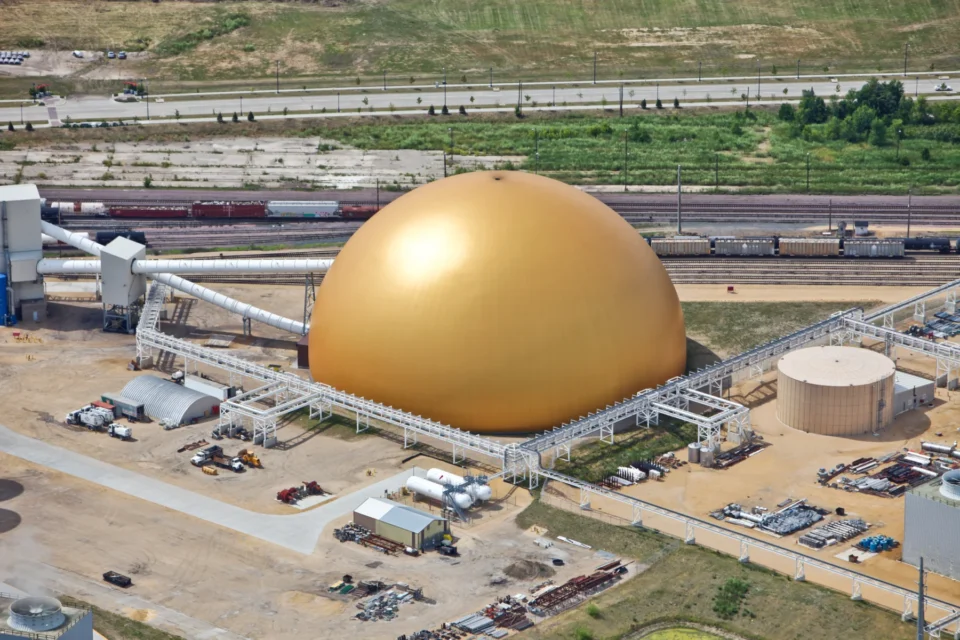
The dome’s capacity was also advantageous in supplying a way to achieve desired throughput from a single storage structure rather than requiring multiple silos, Duffy added.
Dome Technology competed for the project against a company providing aluminum or steel domes. In the end ADM chose a steel-reinforced concrete dome from Dome Technology because “we were quite a bit less expensive,” said Dome Technology sales manager Lane Roberts.
Managing dust inside and out was another selling point. ADM liked the dome option because it didn’t have any beams for dust to collect on, Roberts said. Not only does this ensure safer operations within the dome, but it allows ADM to be a better neighbor to nearby communities. Domes effectively contain dust and help businesses meet local regulations while fostering good relationships with the community, said Dome Technology Vice President of Marketing Jason Miller.
The dome was fitted with a circular stacker reclaimer that provides even filling for coal. According to engineer for Dome Technology Adam Aagard, the advantage with a stacker reclaimer like this is the ability to inventory stored product by age. “You can start reclaiming the oldest product first, and you get almost first-in, first-out because you can control your inventory and where you’re stacking and reclaiming from,” he said.
The project’s success led to Dome Technology securing another ADM project in Columbus, Nebraska, for a dome of similar size storing the same type of coal.
Keeping product secure is one of the most important aspects of coal storage. Companies can proactively protect their investment by selecting a dome for bulk storage, executing routine equipment maintenance and utilizing innovative monitoring systems that analyze the stability of stored materials and moving parts within and outside the structure.
How a dome wards off fire naturally
One way to minimize the likelihood of fire is to select a bulk-storage option that inherently resists deflagration, and certain dome characteristics make fire less likely than in other storage facilities. A dome’s concrete shell is non-combustible and has low thermal conductivity, performing better in large fires than wood or even steel counterparts.
The insulated nature of the concrete shell, composed of polyurethane foam insulation and concrete placed using the shotcrete method, moderates externally generated temperature fluctuations, and the more constant an environment, the more stable otherwise volatile products will be.
The PVC airform covering the entire dome structure provides waterproofing. The dome’s insulated nature also reduces heating and cooling of the walls and air inside, thus preventing condensation from forming and introducing moisture to the product.
The dome is airtight except wherever penetrations are made, aiding in the containment of inert gases pumped inside to deter fires and to minimize available oxygen for supporting fires. The truss-free structure discourages dust build-up, and the double curvature has proven in real-world examples that a dome is structurally stable under extreme fire and heat conditions. The structure itself can survive a disaster that other types of storage might not and will likely reward customers with insurance-premium savings.
Additional design features are key to fire prevention. With a thermal scanner over the belt on the inbound receiving side, infrared cameras check temperatures on coal, while on the belt, to make sure no off-spec product enters the dome. A linear heat cable monitors for fire on the belt, also examining bearings in case one is throwing sparks; this cable might detect a fire travelling along the belt length before it reaches the thermal scanner. A product unique to combustion-prone materials, this system shuts down conveyance and alerts facility management of the fire. Depending on the setup, workers can either extinguish the fire, or an existing fire-suppression system takes care of the problem.
Editor’s note: The following is an excerpt from a Dome Technology article published in the January 2018 issue of World Coal. The article highlights the ways a dome keeps coal secure, reduces dust, and minimizes the likelihood of storage fire. The piece begins with discussion about ADM’s selection of a dome based on ability to secure product. For the complete article, visit World Coal and click on the preview for January 2018.